WEEK 1
The class was about what materials are and how the same material can be modified according to the function its going to be used, for instance glass can be modified and be used as a window and the same glass could be modified and be used as a screen guard for phones.
Materials are categorised in different ways. There are a total of 8 ways in which a material can be categorised. They are:
- Engineered
- Natural
- Performative
- Cement
- Metals
- Ceramics
- Composite
- Polymers
Learned more about the types of materials and also examples of each. Went to places and searched 5-10 materials of each kind, found some in the college itself and a few in the house.
WEEK 2
We talked about perception which means how you register objects.A process is undergone during the testing of any object, first we register the object and then based on our experience related to/with the object creates a notion in our mind. We now test this notion and if it turns out to be false then we think of it as a non valid notion but if it turns out to be right, the notion solidifies into a conviction and later becomes a fact.
We refreshed the learnings from last week(types of materials) and then talked about different properties any material has.These properties are:
- Mechanical
- Thermal
- Optical
- Chemical
- Radiological
- Magnetic
- Electrical
There are a set of questions, which when answered, tell us a lot about the material and give us a direction towards the way of using it. These questions are:
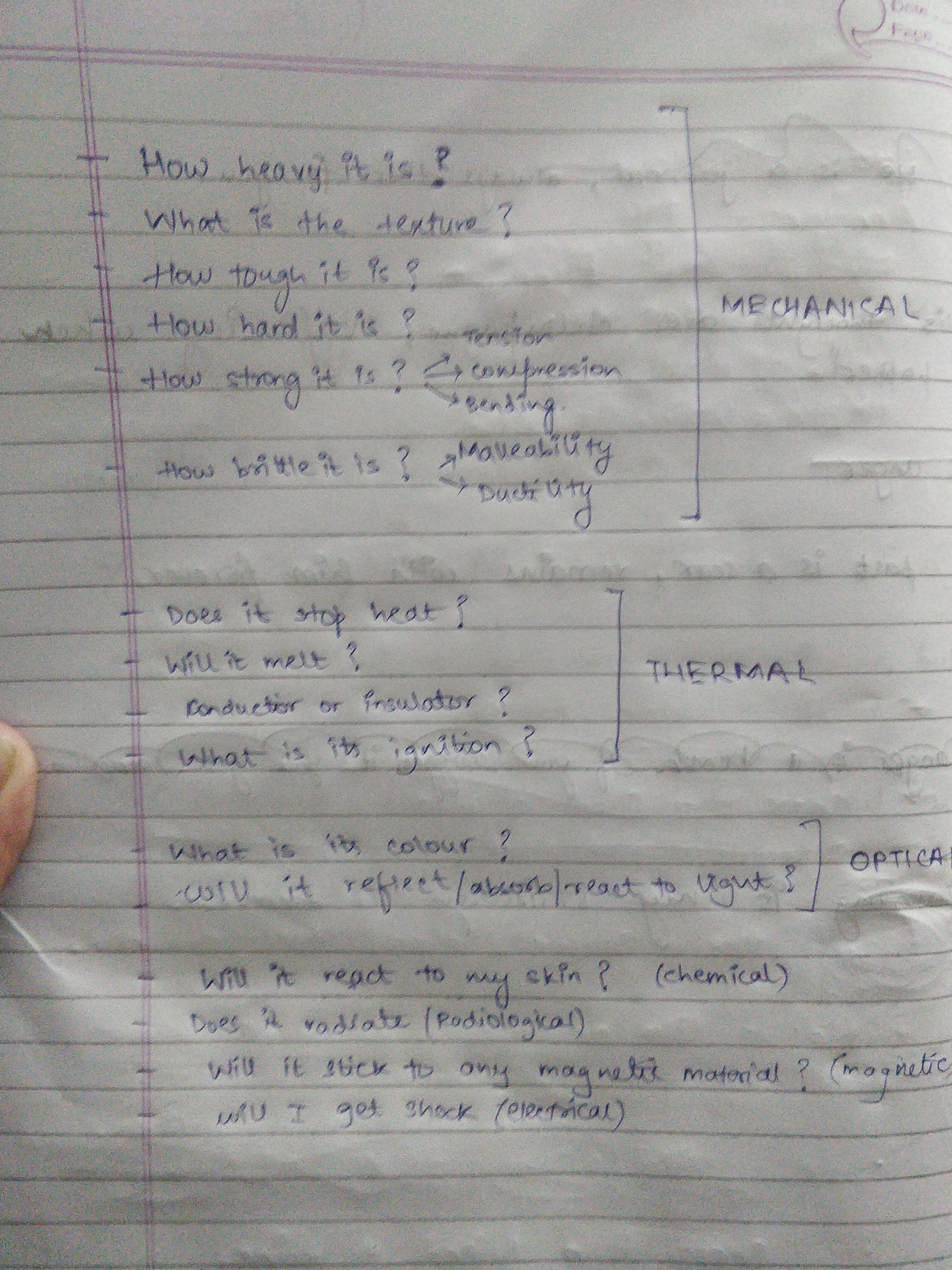
We talked about Heniretta Lacks, who was a woman whose cancer cells are the source of HeLa cell line, the first immortalized human cell line and one of the most important cell line in medical research. Her blood cells are used for testing new products, as her cells are immortal, so it is of great help.
WEEK 3
We had to think of any hand held object and make it a better product by either making its aesthetics better or making its usability easier. Everyone told their ideas to sir and he gave his opinion on how to make it better. After listening to everyone, he asked us to recall the ons which we remember, we either remember the most frequent one or the idea which is different from the others, which seems to be interesting.
We had to take out an object from our bag and keep it in front of us, he gave us 3 mins to draw the object and then told us to pass it to the next person. We drew all the objects in front of us until we got our object back and while drawing a new object he would decrease the time limit, making us draw faster. After 1 round we had to do the same thing again but this time the time limit was 5 seconds!
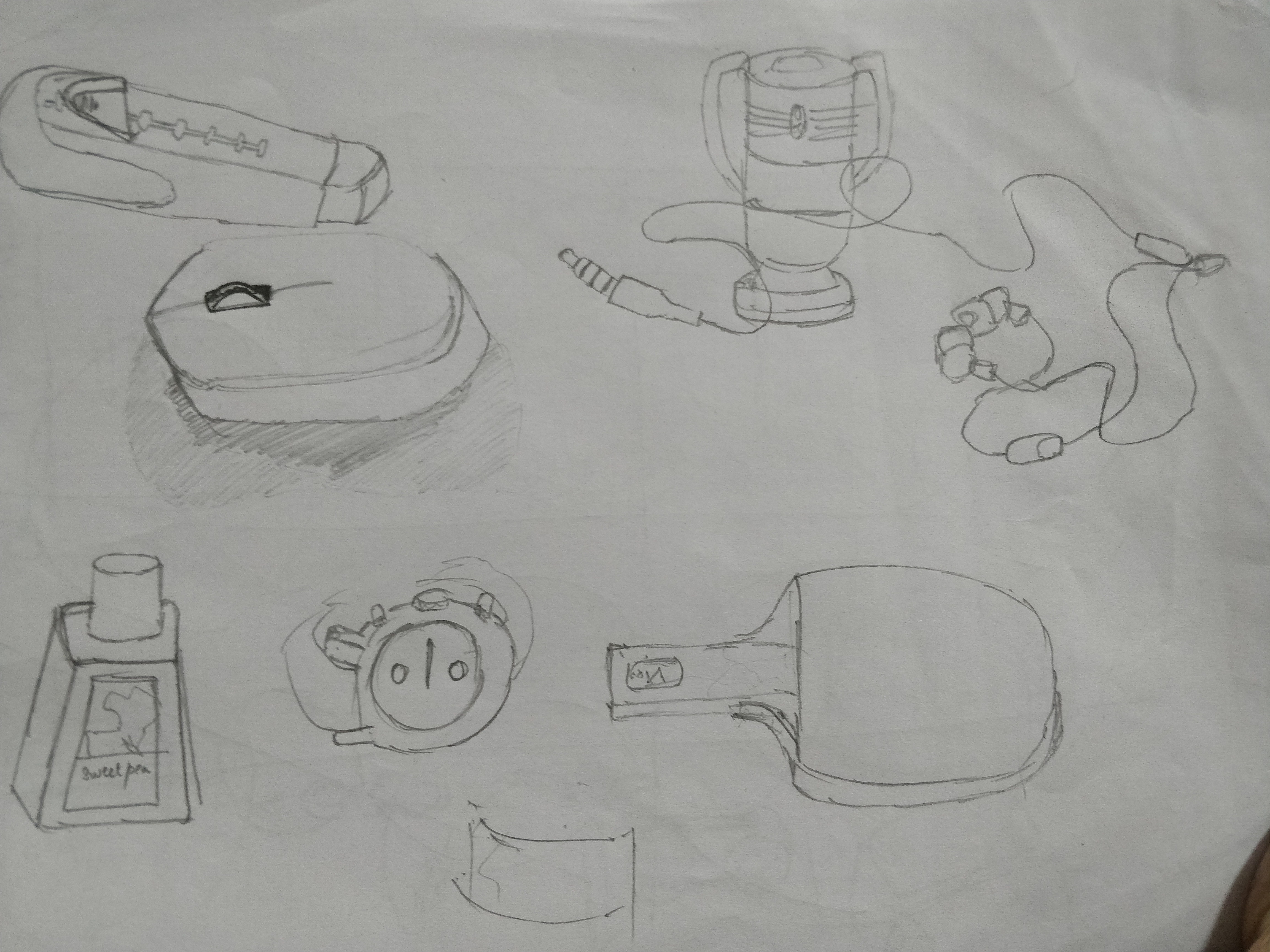
3 minutes drawing 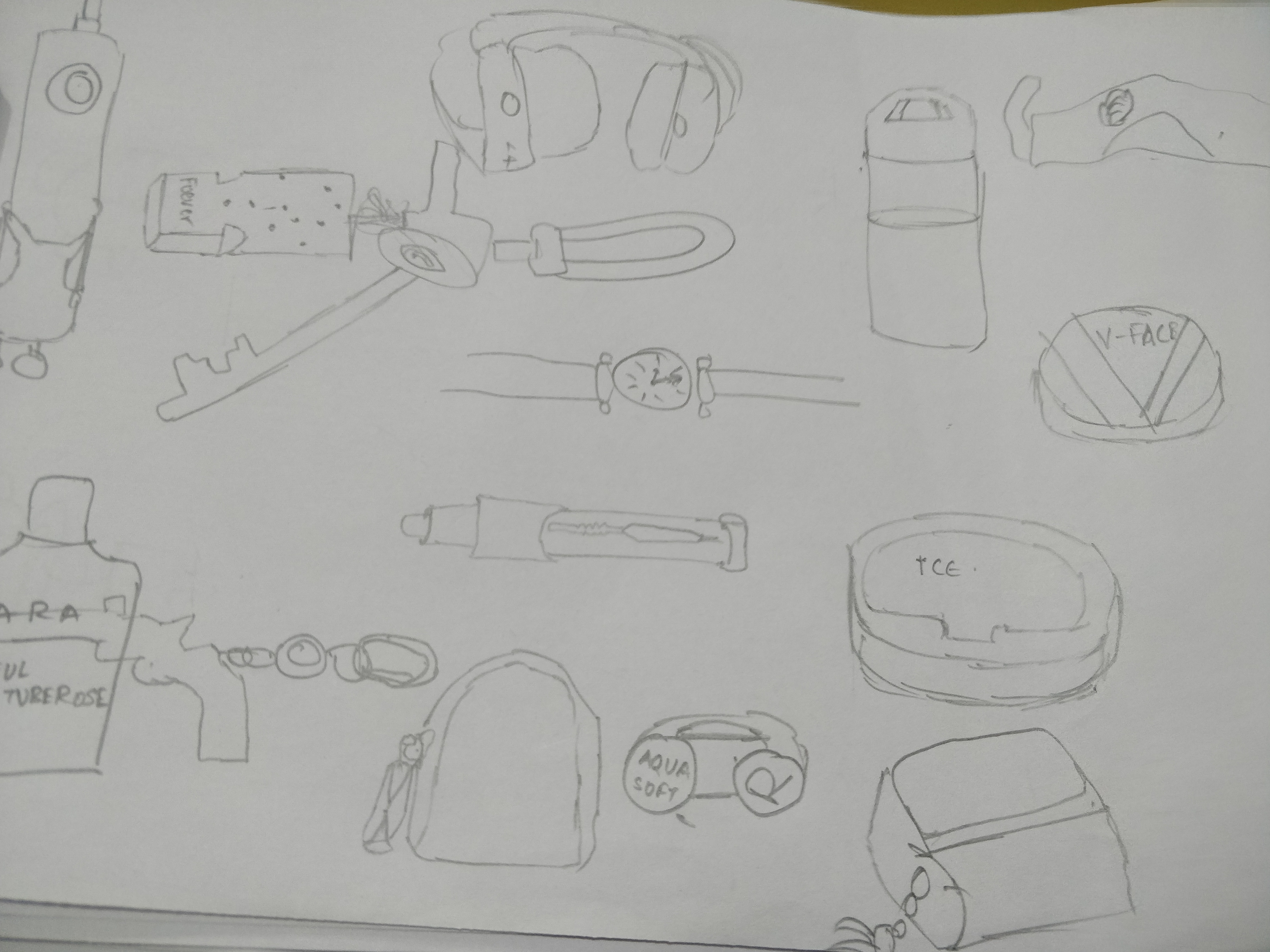
90 seconds drawing 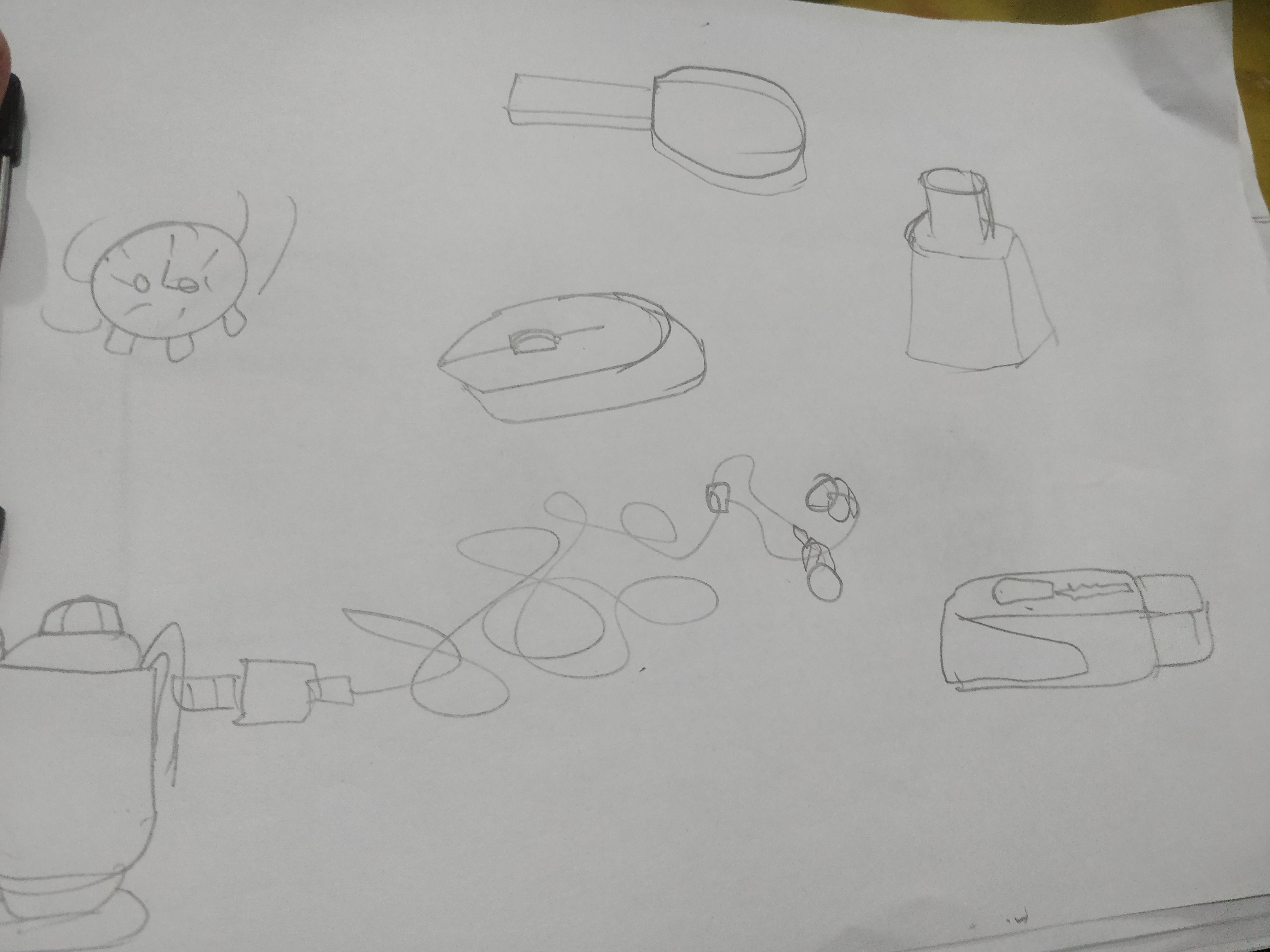
5 seconds drawing
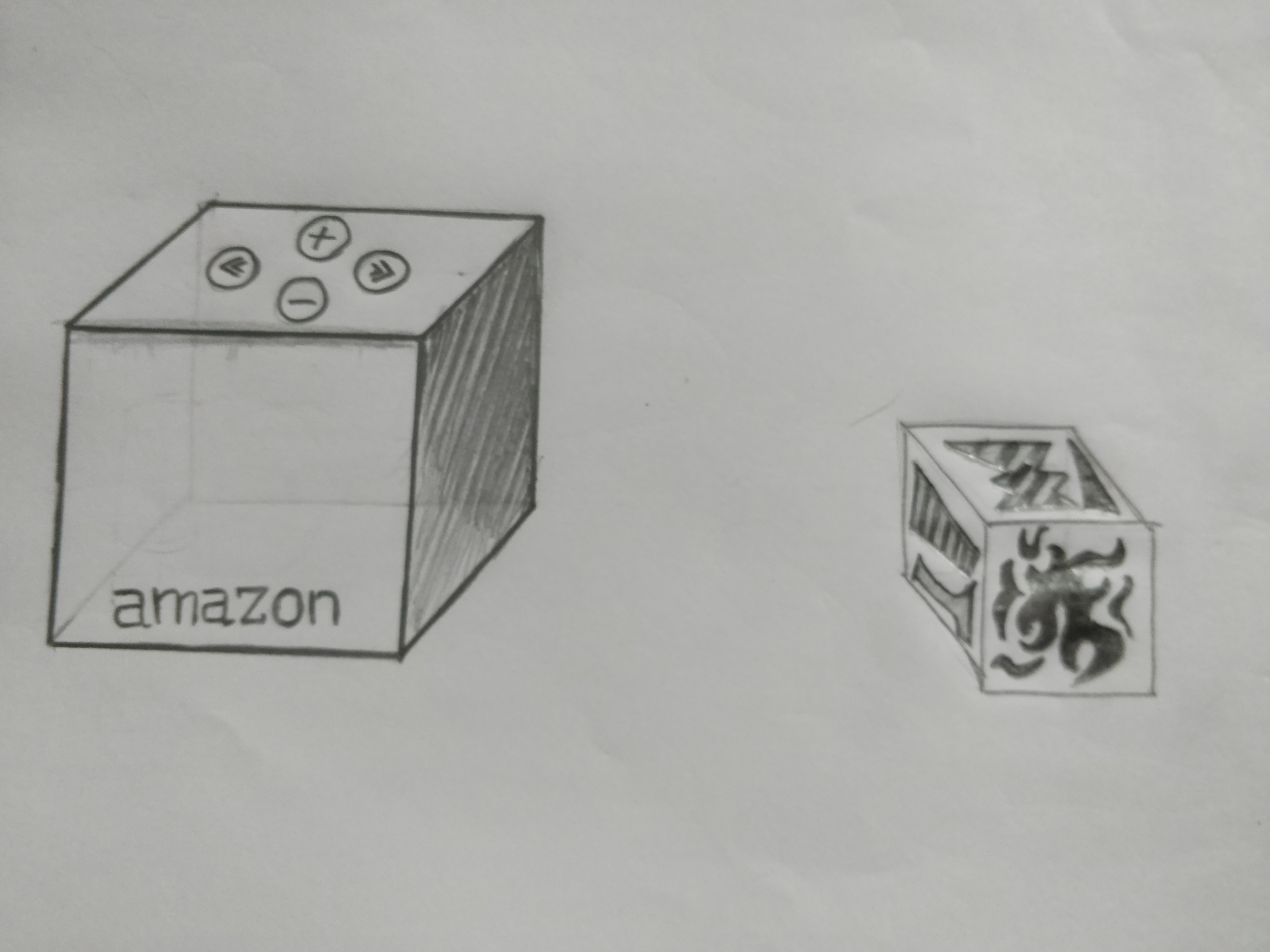
Sir also taught us how to make a perfect cuboid with paper. He shared some tips with us related to this and also told us to practice often. He told us to make a cuboid and turn it into a useful object like a radio without adding any extra shapes to it.
WEEK 4
We were made into groups which had 4 people each, he made us do an exercise. A person in the group had to say anything that came in his mind and another person had to do the same thing but with a different word, we had to combine those two words and make an object which had those two words. For example, a pineapple chair! We had to draw a chair and a pineapple in one product itself. It was a very quick and fun challenge.
After this challenge, we went back in history, 55000 years ago! We talked about how civilisation came into existence and how fire and hunting for food was done. Fire was such a useful tool, it helped the civilisation in cooking food, keeping them warm during cold nights, protecting themselves from insects and predators. They learned how to make weapons and used them to hunt down animals, they improved day by day. We also talked about how we assume things, due to our past experience it is our habit to assume things and later on we might test our assumptions and if they are true, they become facts but if they aren’t, then we just erase that assumption.
We talked about ambiguity, the quality of being open to more than one interpretation. I feel that philosophers spend a lot of time and effort searching for and removing ambiguity in arguments as it can lead to incorrect conclusions and can be used deliberately conceal bad arguments. We also talked about dichotomy, a division/contrast between things. This term is used in mathematics, literature, philosophy or linguistics.
 Rishi Juneja's Blog